As the morning light stretches across the sultry, tropical sky over Mazatlán, Mexico, a small crowd gathers inside Panadería “Don Ramón”.
Racks loaded with steaming hot bolillos (crusty rolls), teleras (soft rolls) and conchas (enriched rolls with a sugary crust) are wheeled out. Lines form. The aroma of fresh-baked bread wafts through the streets.
“My sisters and I could tell the time of day by smell, by what was coming out of the ovens at the panadería two blocks from our house,” said Fany Gerson, a pastry chef and the author of My Sweet Mexico.
Every morning, afternoon and evening, a similar scene plays out across Mexico’s 60,000 registered panaderías, one bread bakery for every 2,100 people. Think of their prevalence as equivalent to convenience stores in the United States.
In Mexico, fresh bread isn’t an indulgence, it’s the standard. A staple at the heart of daily life and major holidays alike, it forms a centuries-old culture.
In the 1520s, the Spanish introduced wheat to Mexico. Because scarce or overpriced bread could be politically dangerous, the Spanish government began regulating the prices and ordered that panaderías sell it in the public plazas for the masses.
These regulations benefited Spanish settlers who relied on bread as a staple. (Corn, central to Indigenous diets, remained outside those policies.)
As the years passed, Mexicans cultivated the wheat, grew it, milled it, baked it and more important, adapted it into the forms we see today.
“Even though it doesn’t have the same cultural weight as corn or tortillas,” bread, said Rafa Rivera, the chef and owner of Forte in Mexico City, “has importance on an economic, social and cultural level.”
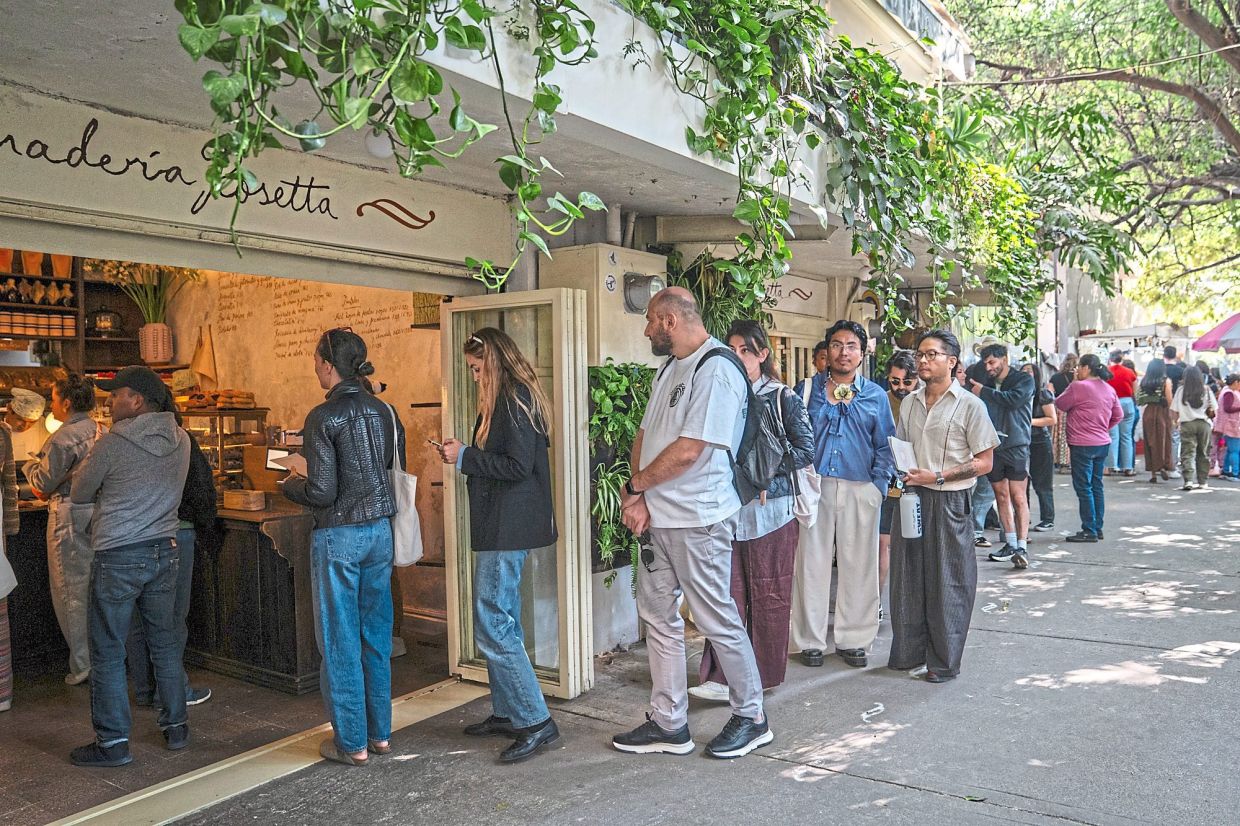
The most widely produced and consumed is bolillo – what Elena Reygadas, the chef of Panadería Rosetta in Mexico City, described as “the most democratic” of Mexican breads.
Oval-shaped rolls with a crisp golden crust and a soft interior, bolillos are used in tortas (sandwiches), molletes (open-faced sandwiches), and, in many homes, for scooping up food off the plate and soaking up sauces, soups and stews.
“It is deeply cultural,” Reygadas said, “because it is on everyone’s table.”
The bolillo’s creation is often linked to the era of Emperor Maximilian I (1864 to 1867), when French bakers were believed to have brought their techniques to Mexico and when French-style recipes were adapted to local wheat, clay ovens, climate and altitude.
Typically made with flour, water, salt, yeast and without fat, bolillos stale quickly, prompting panaderías to make multiple batches a day – a ritual that continues today.
This openness to adaptation remains, with many breads reflecting the regions they’re from: In Guadalajara, where the altitude contributes to an expedited rise and moisture loss in bread, birrote develops a crust and structure that’s sturdy enough to withstand the salsa-soaked tortas ahogadas it’s made for.
In the western state of Michoacán, the aguacata, a piloncillo-sweetened treat with a faint smokiness from clay ovens, takes its name from the region’s primary crop, avocados.
In Tlaxcala, a noted producer of pulque (an alcohol made from fermented agave sap), panaderos use it to leaven pan de pulque.
So, too, does another of Mexico’s most popular breads – pan de muerto, eaten for Día de Muertos season in October and November – change from place to place, reflecting the tastes of its home region.
In Oaxaca, a version called pan de yema (an egg-enriched roll) is often topped with a small face made from alfeñique (moulded sugar paste).
In Puebla, bright pink sugar tops crisp, ring-shaped golletes, and in Guerrero, bakers shape pan de muñeco into human figures to represent the deceased.
But the most well-known version, sold nationally each October, is a round, lightly sweetened roll topped with crossed strips of dough meant to resemble bones and scented with orange blossom water.
Another noted holiday-focused bread, rosca de reyes, eaten on Jan 6 for the Epiphany, maintains its oval wreath shape across the country.
An enriched dough decorated with candied fruit and baked with a hidden figurine inside, it varies chiefly in flavour, filling and topping, reflecting the choices of its bakers.
Sales of pan de muerto and rosca de reyes make up a major portion of a panadería’s yearly sales.
Last year, Mexicans spent about US$230 (RM910mil) nationwide on the two breads.
But, after the rush of October and January and the heaviest baking seasons, Panadería “Don Ramón” returns to its predictably brisk but rhythmic pace.
At 8pm, it closes its doors, with a soft and affectionate “nos vemos mañana,” we’ll see you tomorrow. The last customers walk out, carrying bags of conchas, cuernitos and bolillos.
Racks empty, the night shift arrives and begins anew – making the bread for the next day’s morning rush. – © 2026 The New York Times Company
Makes 6 large (20cm) bolillos
In Mexico, the bolillo is the daily bread you pick up on the way home, still warm from the panadería. It’s commonly used as the base of a torta, split and sandwiched with meat (like milanesa, carnitas or jamón), beans, avocado, pickled jalapeños and salsa.
At breakfast, it’s toasted for open-faced molletes, topped with refried beans, melted cheese and salsa.
In northern Mexico and along the border, bolillos often replace hot dog buns, especially for Sonoran-style hot dogs, wrapped in bacon and piled with beans, crema, mustard and salsa.
Its flavor is neutral, its crumb tight but soft and sturdy enough to hold heavy, wet fillings yet tender enough to compress when bitten.
Deeply golden with a slightly crisp crust, these bolillos have a soft interior designed to revientar, or spring cleanly when cut.
Butter or oil is brushed directly into the score in the top, allowing the loaf to expand down the center, producing the classic panadería-style submarine-like shape.
- 2 tbsp unsalted butter, at room temperature, plus more for greasing and brushing
- 4 1/2 tsp instant dry yeast
- 1 3/4 tsp granulated sugar
- 2 1/4 tsp kosher salt
- 500g bread flour (12% to 13% protein)
To make
- In the bowl of a stand mixer (or a large bowl if kneading by hand), whisk together 1 1/4 cups/296g room temperature water, the butter, yeast, sugar and salt until the salt and sugar are almost completely dissolved (the butter will remain in clumps and that is OK).
- Add the flour and, whether or not you’re using a stand mixer, use a rubber spatula to mix until a shaggy dough forms and all of the flour has been incorporated and no dry flour is left in the bowl, about 60 seconds.
- If the mixture does not come together and looks dry, add 1 tbsp water and continue mixing until no dry flour remains. Repeat if necessary.
- Transfer dough to a stand mixer fitted with a dough hook. Mix on medium-low speed until the dough comes together in one uniform mass, about two minutes. Increase the speed to medium and continue kneading until the dough is smooth and elastic but slightly sticky, about five minutes.
- Alternatively, knead dough by hand on a clean work surface until smooth and elastic but slightly sticky. The dough will become easier to work with by the time you shape it. Avoid adding additional flour to dough, use a bench scraper to help you remove the dough from the surface and rub your hands with soft butter or vegetable oil to help you knead. Dough will become less sticky as it rests.
- Form the dough into a ball, place in a lightly greased bowl, cover with a clean towel or plastic wrap, and let rest at room temperature for about 30 minutes. The dough will relax and show visible puffing, but will not double. You can expect a 50% to 75% size increase. (Don’t let it double or it will not spring in the oven! See Tip.)
- Turn the dough out onto a work surface and divide into six° equal pieces, about 142g each. Shape the pieces into balls, and firm them up by rolling them under your lightly cupped fingers. Place the rolls on a parchment-lined baking sheet, cover them with a clean towel or plastic, and let them rest for about 10 minutes.
- Working with one piece at a time, flatten and deflate the dough firmly by pounding it with the heel of your hand or slapping it against the work surface. Do not be gentle; the dough should be thoroughly deflated.
- Shape it into a disk about 15cm wide. Fold the far edge of the disk toward the center. Using your fingers, press firmly along the fold to seal, then use the heel of your hand to pound along the seam to secure it tightly.
- Fold the dough over again in the same direction, this time about 2.5cm from the edge of the disk. Press along the new seam with your fingers to seal, then pound again with the heel of your hand to secure.
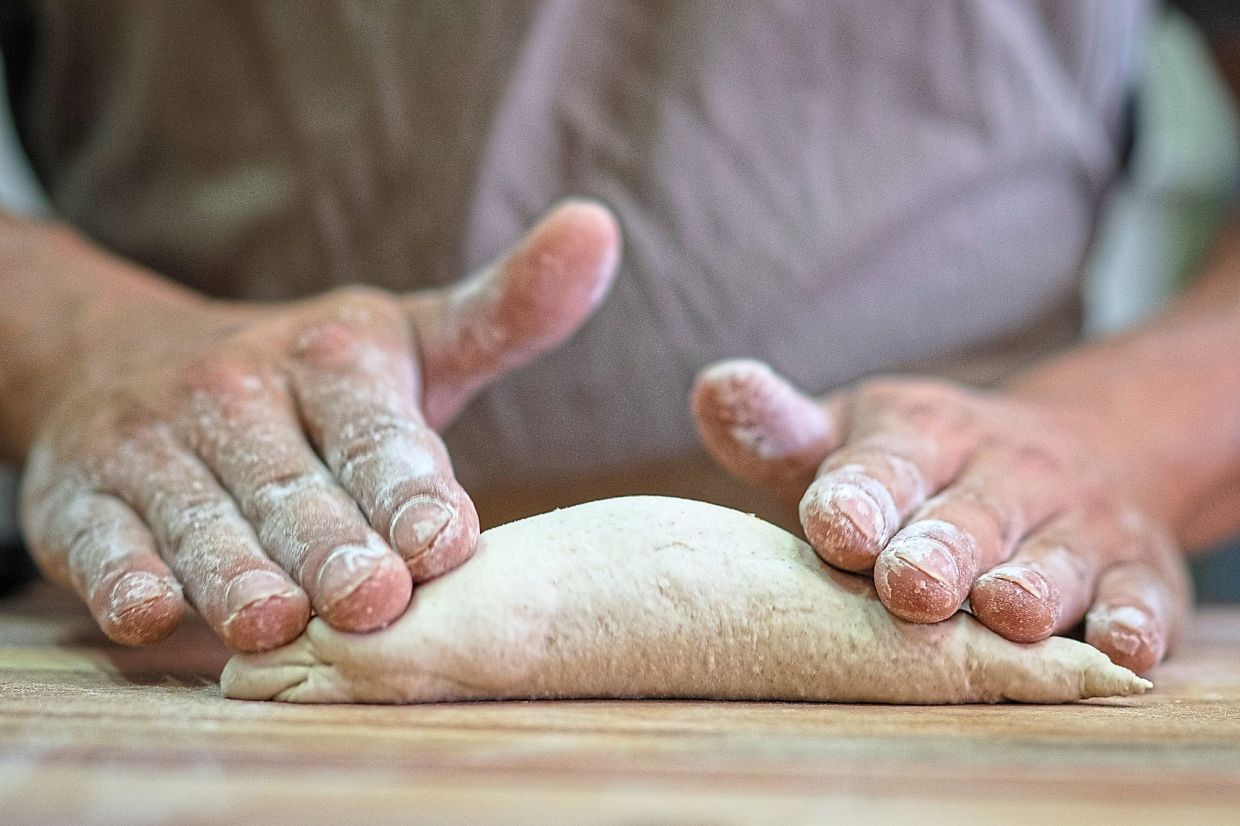
- Roll the dough into a short log. As you roll, angle your hands slightly so that your thumbs are higher than your pinkies making the center of the log fatter than the tapered ends.
- Pinch the final seam closed. Place seam-side down on a parchment-lined baking sheet. Repeat with the remaining pieces.
- Cover the shaped bolillos with a clean towel or plastic wrap and let rise at room temperature until noticeably larger and well puffed but not fully doubled, 25 to 40 minutes, depending on the temperature of your kitchen.
- Arrange a rack in the center of the oven and heat to 190°C.
- Using a razor blade or very sharp knife, make one clean slash along the length of the bolillo, holding the blade at about a 30-degree angle to the surface and cutting about 0.6cm deep. The motion should be quick and confident; do not saw back and forth.
- Brush softened or melted butter directly into the cut only. Do not brush the surface of the loaf. This will prevent a crust from forming in the cut and allow it to expand in the oven as it bakes.
- Bake until golden and slightly crisp, for 20 to 25 minutes. The bolillos should feel light for their size and sound hollow when tapped.
- Transfer to a rack and let cool slightly before serving. Wrap leftover bolillos tightly in plastic and store at room temperature for up to three days.
Tip: You might be used to dough doubling in size at each proofing stage, but this dough must not double when it rises. If it does, it will end up dense and very crispy instead of light and springy. — By RICK A. MARTINEZ