Famous for its dense jumble of hawker stalls, old trading shops and bargain souvenir strip, few streets in Kuala Lumpur carry the layered history of Petaling Street, aka Chinatown.
But beneath its familiar bustle, change steadily seeps through.
In recent years, the enclave has shifted toward a more tourist-friendly identity, with boutique hotels, hip cafes and colourful murals emerging alongside the ageing shophouses and long-standing businesses that once defined the area.
In a tribute to the Petaling Street she once knew, multidisciplinary artist Ho Chee Jen, also known as OOOH, transforms the neighbourhood into Malaysia’s first “24-hour open-air museum” – aptly titled The Museum of Disappearance.
Launched in conjunction with the KL Festival, the museum has no physical exhibits. Instead, its collection comprises labels – in English – placed at sites across Petaling Street that hold personal significance for Ho, 35, a former student of the nearby SMJK Confucian.
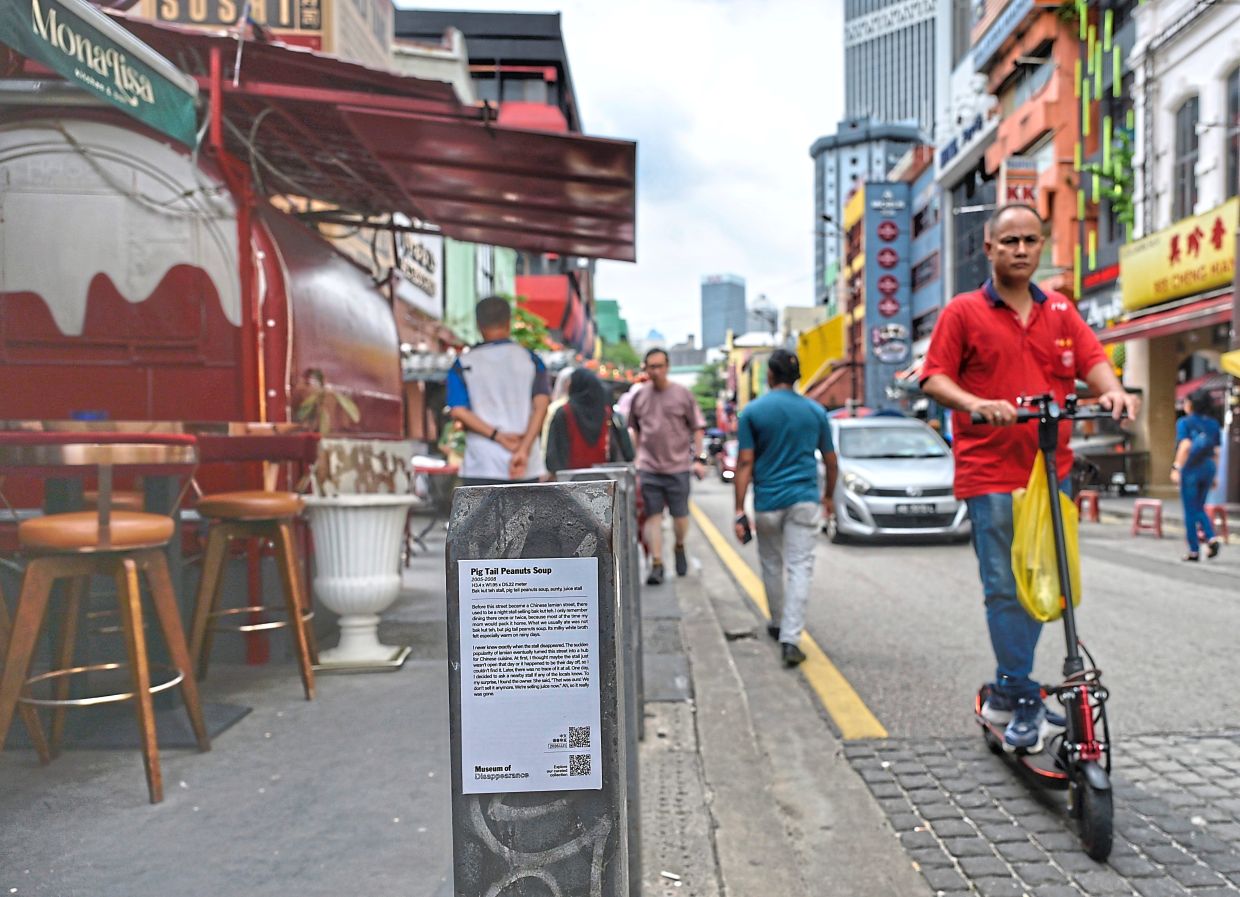
Blending into their surroundings, the labels are easily overlooked, encouraging careful, attentive exploration of the area’s shophouses and back alleys.
Residents and visitors are invited to reconnect with the area and reflect on ongoing and past transformations, fostering a deeper awareness of its local history and narratives.
The museum itself fits in perfectly with KL Festival’s theme of “Memory and Tomorrow” this year.
“The goal for this curated festival is to engage people with art in meaningful ways – to spark imagination, inspire new ways of thinking, and encourage audiences to experience something fresh,” says June Tan, artistic director of KL Festival.
“For example, how do we speak about memories that shape us and what visions of tomorrow do these artists suggest through their work?” she adds.
The Museum of Disappearance will also extend beyond the KL Festival, continuing after the festival ends this month.
This research-based arts initiative is supported by the 2025 Krishen Jit Fund and involves collaboration between Ho and curator Low Pey Sien to realise the project.
Spaces once familiar
Born and raised in Kuala Lumpur, Ho, also a lecturer in art and media studies, recalls Petaling Street as a familiar stomping ground during her secondary school years. After leaving Malaysia to study in Britain and later working in Singapore, she returned to a city where the neighbourhood she once knew has shifted noticeably.
Through casual walks and visits, she has seen how familiar spaces in Petaling Street have gradually disappeared or been reshaped over time. That slow, almost imperceptible erasure becomes the starting point of her artistic inquiry.
Through the Museum of Disappearance, Ho explores elements such as space, buildings and emotions through text-based and sound-based works, which include urban memory, personal experiences, cultural imprints and fragments of time.
“Some of my fondest memories of Petaling Street are tied to my secondary school years, which was one of the most energetic and intense periods of my life,” says Ho.
In those days, she was active in school societies such as choir, Buddhist Society, Kadet Remaja, Chinese Society and the school magazine committee.
“So for me, Petaling Street is not just a physical place, but also a site of intense personal growth, energy and shared memories,” she adds.
However, its rapid changes in the past several years has left Ho with a lingering sense of loss.
“Familiar street corners have transformed into unfamiliar cafes, simple old shops have become elaborately decorated hotels or souvenir stores. Sometimes, standing in the same spot, I cannot recall what was there before.
“The pace of spatial change far outstrips memory, creating a subtle dissonance between the city and the body. Through this work, I want to hold on to these disappearing memories,” says Ho.
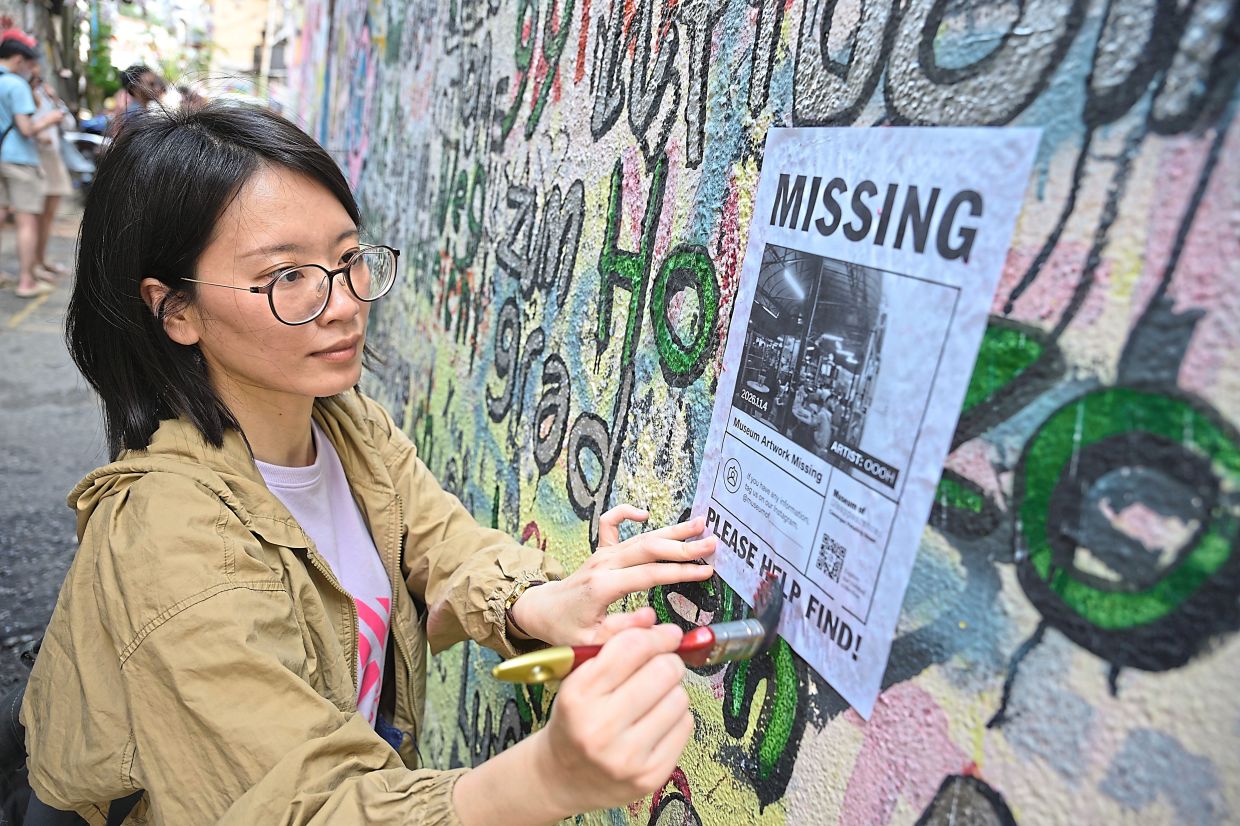
Like any public art project, Ho has also had to deal with vandalism, and Petaling Street – often romanticised in tourist brochures – is not immune.
Last week, a few labels from the Museum of Disappearance were torn off at certain sites, a small but telling reminder of how easily these attempts to preserve memory can be undone in the everyday life of the city.
Away from fixed walls
According to curator Low, 35, the project presents a total of 25 artworks spread out across Petaling Street.
Drawing on Ho’s intimate knowledge of the area, the project gradually takes shape as a mapped yet open-ended experience.
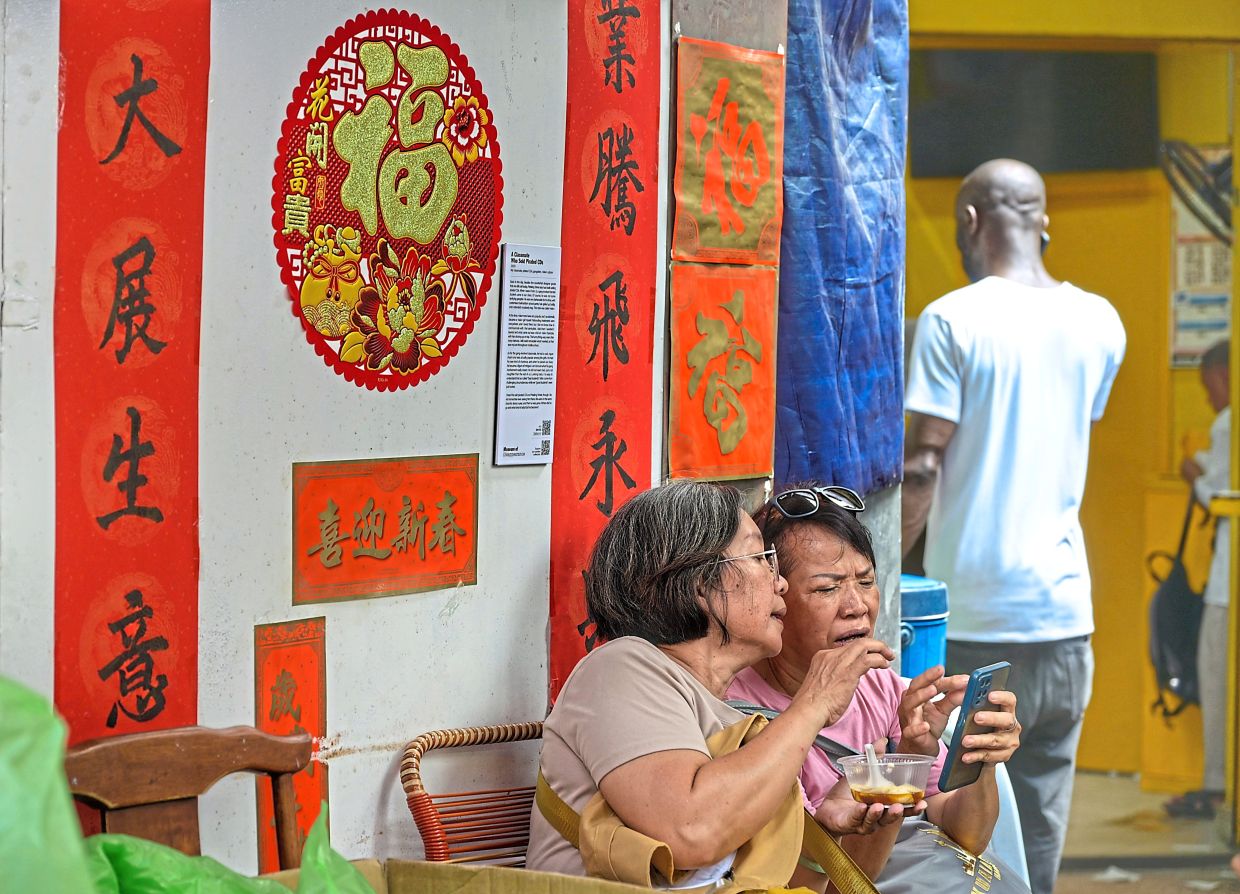
The exact locations of the works are not revealed in advance. Instead, visitors are invited to wander through Petaling Street on foot, encountering the artworks unexpectedly and engaging with the city through a renewed sense of curiosity.
“Considering the significant amount of time OOOH has spent here, it became natural to us that Petaling Street has to be the first location for our museum. Her work is subtle and sensitive to the site, and we hope that integrating a fun mechanism to encounter the work will help visitors see the place from a different perspective,” says Low.
Social media – especially Instagram – has been key in building anticipation and curiosity around the project, and so far, it has proven highly effective in drawing attention and sparking early interest.
“Without the presence of a physical institution, we needed a platform to share details about the museum and interact with visitors.
“Curiously, even without putting up much information, many people trusted us, showing the power that ‘institutions’ hold in defining value, and it is something we want to interrogate through the Museum of Disappearance,” says Low.
The team is also exploring the possibility of extending the project to other towns, as well as reinterpreting “disappearance” through the perspectives of different artists.
Visitors are encouraged to experience the Museum of Disappearance on foot, with comfortable walking shoes recommended and an umbrella advised as a precaution.
There are two designated starting points, each providing an exhibition statement and viewing guide: one located near Exit A of Pasar Seni MRT station along Jalan Panggong, and the other at the Petaling Street main entrance on the Jalan Tun Tan Cheng Lock side.
Ho emphasises that there is no fixed route, visitors can move freely in search of the “artworks,” finding their own way through the experience.
In doing so, the project raises a question: who determines what is worth remembering?
More info: klfestival.com.my.